Why We Designed Phase 2 Cleanse This Way
and the Value of Sterile, Structured Aftercare
Over the years, I’ve spoken to plenty of patients who left surgery and were handed saline that had simply been decanted into an unlabelled bottle. Nothing sinister about it, and nothing I’d blame any clinic for. It’s just that the bottle carried no label, the saline had already been poured out of its original sterile packaging, and instructions on exactly how and how often to use it varied from clinic to clinic, and sometimes from nurse to nurse within the same clinic. Nobody could quite tell me what “sterile” was still supposed to mean once saline had been decanted that way. I kept asking myself the same question: why is the surgery performed to such an incredibly high standard, yet aftercare for the first three days can be so inconsistent? That question is what led to Phase 2, Cleanse.
What is Phase 2 Cleanse
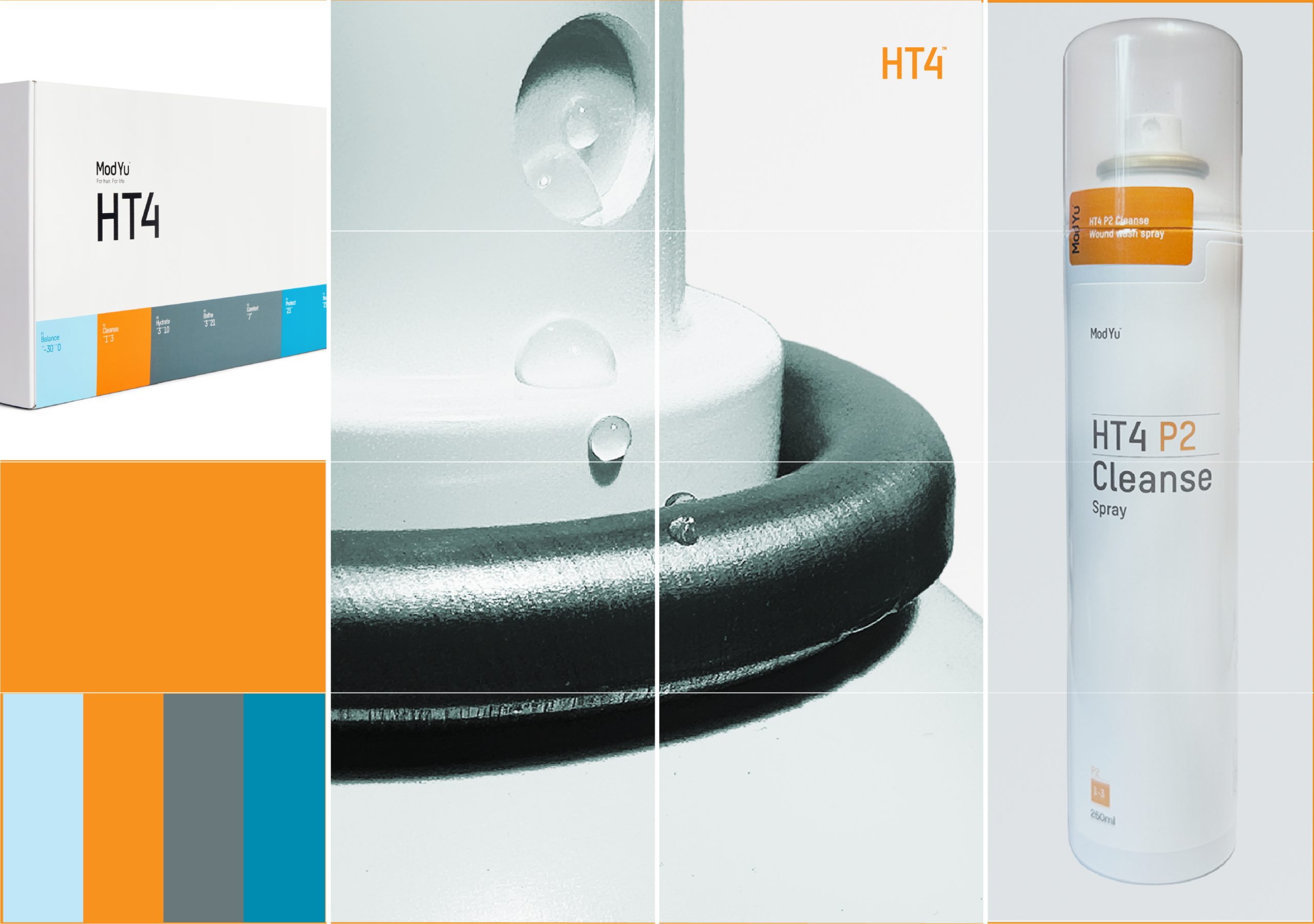
Cleanse is the second phase of the HT4 clinic-led aftercare system, used during the first three days after your procedure. It’s a sterile 0.9% saline solution, delivered as a continuous fine mist from a fully sealed, CE-marked medical device. But Cleanse isn’t really the point. The point is that HT4 treats those first 72 hours as their own distinct stage of recovery, with their own dedicated phase, rather than folding them into general advice about “keeping the scalp hydrated”.
Why do the first 72 hours matter so much??
Because this is the moment everything changes for the patient. The surgery is finished. The clinic isn’t standing beside them any more. They’re at home, often alone with their thoughts, and that’s usually when anxiety is at its highest. Patients worry constantly about disturbing a graft. They search Google and social media for reassurance and often find conflicting advice instead. This is exactly the moment they need clear guidance, not more uncertainty, and it’s exactly the moment structured aftercare has traditionally been weakest.
Those first few days are often as much about reassurance as they are about recovery. If you’d like to explore that in more depth, you can read my article on building confidence after hair transplant surgery.
Why does moisture balance matter so much in these first few days?
As hair transplant surgeon Dr Sara Wasserbauer has put it, achieving the optimal wound moisture balance is fundamental for optimal healing. Not too wet. Not too dry. HT4 didn’t invent that principle. Instead, Phase 2 was built around it, because the scalp needs a consistent, controlled way to maintain that balance during the days it matters most, rather than relying on patients guessing how much is enough.
If you’re interested in the role saline plays during recovery, I’ve explored that question in more detail in my article asking whether saline alone is enough after surgery.
Why isn’t all saline the same?
This isn’t a criticism of any clinic. It’s simply something worth explaining properly, because I think most patients assume saline is saline, and it isn’t quite that simple.
The solution itself, 0.9% sodium chloride, is the same regardless of where it comes from. What changes is the delivery method, and that’s where the real difference sits. Once saline is decanted from its original sterile container into another bottle, the original sterile presentation can no longer be relied upon in the same way. Conventional trigger bottles may also draw air back into the container during use, which is why they aren’t designed to maintain sterility in the way a sealed Bag-on-Valve system is. A fully sealed, CE-marked Bag-on-Valve medical device is a different proposition entirely: nothing is ever poured, and no air is drawn back in to compromise what’s left inside. Same solution. Completely different standard of delivery.
If you’d like to understand the technology in more detail, I’ve also explained what makes a sterile saline spray different and why the delivery system matters just as much as the saline itself.
Why did sterility matter so much to me?
When I first set out to build this part of HT4, I honestly thought it would be the easy part. Saline has been used safely for decades, it’s a staple in all sorts of products, from eye drops to wound care, so I assumed sourcing it would be straightforward. I wasn’t even looking for anything unusual to begin with. I just wanted something similar to what surgeons were already giving patients. What I hadn’t expected was how difficult it would actually be to find a manufacturer capable of producing it in a sealed Bag-on-Valve format rather than a standard bottle. Of everything in the HT4 system, Cleanse has been the hardest product to source, the hardest to develop, and the hardest to get manufactured and shipped, purely because of that delivery technology.
The bigger turning point, though, was regulatory rather than technical.
I didn’t want to just assume Cleanse could be treated the same way as the saline clinics were already using, so I had it properly assessed. That meant commissioning a formal classification review against UK and EU regulations, including the Cosmetic Products Regulation, the Human Medicines Regulations, and the EU Medical Device Regulation, and looking closely at MHRA guidance on where the line sits between a medical device and a medicinal product. What came back was clear: Cleanse falls to be classified as a medical device, and a product like this, used on broken skin during surgery, carries a genuine infection risk if it isn’t sterile. That’s what shaped Cleanse. It wasn’t a marketing decision I made afterwards to sound more credible, and it wasn’t a single instruction from a regulator either. It was the outcome of taking the time to have it assessed properly rather than assuming the existing approach was good enough. I’ll admit, I find it hard not to notice the irony in that: if that’s the standard my own product had to meet, it’s difficult to understand why saline decanted into an unlabelled bottle at a clinic isn’t held to anything like the same scrutiny, even though it’s ending up on exactly the same kind of open wound. I don’t say that to criticise any clinic. Most have simply worked with the best options available until now. But it’s part of why I felt this mattered enough to solve properly.
Why the Bag-on-Valve delivery system specifically?
Because the delivery system is doing more work than people realise. It sprays evenly from any angle, including upside down, which matters when you’re trying to reach the back or sides of your own scalp without straining. It delivers a consistent, fine mist rather than an uneven jet, because a heavy, uneven spray is exactly the kind of thing that can put unnecessary force on a freshly placed graft. And because the design prevents air being drawn back into the container as it’s used, it’s built to maintain sterility throughout, right down to the last spray, which matters when you’re using it as often as these first few days require. None of that is technology for its own sake. It’s technology that makes it easier for patients to actually follow the routine they’ve been given.
Why spray so frequently?
The instruction to spray regularly isn’t really about the spraying itself. It’s about helping maintain that moisture balance consistently, rather than in occasional bursts, during the window when it matters most. There’s a secondary benefit too, one I think gets overlooked: a scalp that’s being kept comfortably hydrated is a scalp patients are less tempted to touch, rub or scratch. Frequent, gentle hydration naturally reduces the urge to interfere with healing grafts, simply because there’s less tightness and irritation prompting that urge in the first place.
One of the biggest concerns patients have is accidentally disturbing their grafts. I’ve covered that topic separately in my article on when it’s safe to touch or scratch grafts after a hair transplant.
What does this structure actually give patients?
Confidence, more than anything else. The questions I hear most in those first few days are always the same. Did I damage a graft? Am I spraying enough? Too much? Should I be touching it at all? Is what I’m feeling normal? A clear, structured routine doesn’t answer every one of those questions directly, but it removes the guesswork underneath most of them, because patients aren’t left improvising. They’re following a structured phase created specifically for that stage of recovery.
Why is Cleanse a phase, not just a product?
Because I don’t think of it as “we sell saline.” I think of it as: for these three days, the scalp has different needs than it will have next week, or next month, and the system should change accordingly. Cleanse exists because this specific window of recovery deserves its own dedicated stage, not because saline happened to need a name. I’d also rather be clear about what that stage is and isn’t. Cleanse wasn’t designed to improve graft survival, produce better surgical results, or speed up healing. It was designed to support a clean, hydrated, comfortable scalp environment during the immediate post-procedure period, and to help patients follow a consistent routine at exactly the point they need one most.
Why Phase 2 matters
The first three days after a hair transplant are unlike any other stage of recovery. The scalp has different needs. Patients have different concerns. That’s why I believe those first 72 hours deserve their own dedicated phase, rather than being treated as an afterthought. Phase 2 Cleanse was designed to give patients a sterile, structured and reassuring start to their recovery, because surgery may have finished, but recovery has only just begun.
Phase 2 is only one part of the recovery journey. Once those first 72 hours have passed, the scalp’s needs begin to change again, which is why Phase 3 introduces three products working together to support the next stage of recovery. I explain the thinking behind that approach in the next article in this series.