Why Are There Three Products in Phase 3?
The Value of Hydrate, Bathe and Comfort Working Together
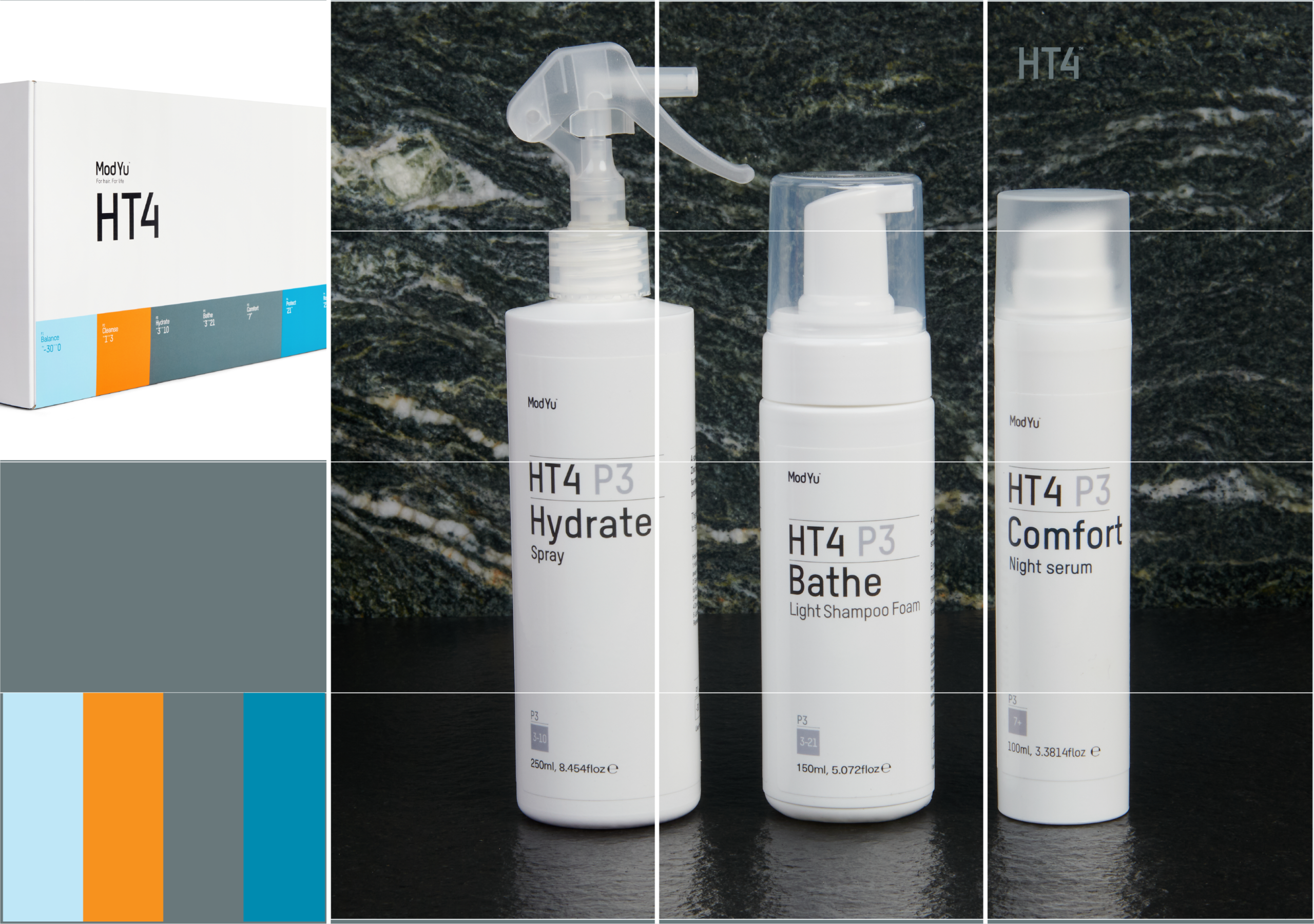
One of the questions I get asked most is why Phase 3 contains three different products instead of one. The honest answer is: if I could have achieved everything Phase 3 needed with a single product, I would have. It would have been simpler to make, simpler to explain, and simpler to sell. But recovery isn’t one event. It’s changing constantly, sometimes hour by hour, and I didn’t think one formulation could honestly keep up with that.
What actually changes after the first three days?
Almost everything. Once Phase 2 ends, the scalp itself starts changing, often quite quickly. Patients begin washing again. Hydration becomes something to actively manage rather than something a clinic handles for you. Dryness appears. Itching begins. Tightness develops, often worse at night. And at the same time, patients are stepping back into ordinary life, going back to work, sleeping in their own bed, trying to feel normal again. Those are genuinely different problems, happening at different points in the same day, and different problems need different solutions.
Why three products, not one?
Not because more products are automatically better. It’s because one formulation simply can’t realistically perform three completely different jobs well. A product designed to rinse cleanly away can’t also be designed to sit on the scalp for hours overnight. A leave-on spray for daytime comfort isn’t built to lift away debris the way a wash needs to. Trying to force one formulation to do all of that would mean compromising on all three, rather than doing any of them properly.
Phase 3 only makes sense once the first 72 hours are behind you. If you haven’t already, it’s worth reading Why Cleanse? – And the Value of Sterile, Structured Aftercare, because that’s the foundation everything in this phase builds on.
Hydrate: comfort you can reach for throughout the day
Hydrate isn’t a wash, and it isn’t meant to repair anything overnight. It’s a leave-on spray, designed for the moments during the day when your scalp feels dry or tight and you don’t want to wash it again just to get some relief. I wanted patients to have something they could use whenever they needed it, without that meaning another full wash routine. Ingredients such as Manuka honey and panthenol were selected to support comfort and moisture throughout the day, alongside other carefully chosen ingredients, in a formulation gentle enough to use whenever your scalp needs it.
Bathe: why the first wash isn’t just “shampoo”
Patients often assume shampoo is shampoo, and understandably so. But the first washes after a hair transplant have a very specific job: cleansing gently, removing dried saline and debris, managing excess oil, all without encouraging any rubbing at the scalp. That’s why Bathe is a light foam rather than a traditional lather. It spreads easily, rinses out easily, and doesn’t need vigorous rubbing to work. I chose a foam because patients shouldn’t have to scrub, not because foam is a nicer texture.
Many clinics recommend baby shampoo because the intention is absolutely right. They want patients to use something gentle, and I agree with that completely. Where I see it differently is that gentle wasn’t the only thing I was designing for. I was designing for a healing adult scalp after surgery, not a baby’s eyes. That’s why I created Bathe specifically for this stage of recovery, rather than adapting a product that had originally been made for babies. Baby shampoo wasn’t designed for a healing surgical scalp. It was designed not to sting a baby’s eyes.
I’ve also written a separate guide explaining how to wash your hair after a hair transplant, including why the first few washes need a different approach from your normal routine.
Comfort: why nights need their own product
This is the one I find myself explaining the most, maybe because it’s the one people expect least. Nights are genuinely different. Tightness, dryness, pillow friction, and patients waking up scratching without really meaning to, none of that behaves the same way it does during the day. Hydrate is built for daytime use. Comfort exists because overnight needs something else entirely, a product designed to sit on the scalp for hours rather than being reapplied throughout the day.
Comfort isn’t trying to replace Hydrate. It’s doing a different job. During the day, you can simply spray again if your scalp feels dry. Overnight, you can’t. That’s why Comfort was formulated to stay where you put it, working while you sleep rather than disappearing after a few minutes.
If you’ve ever wondered whether tightness, dryness or itching are normal after a hair transplant, I’ve explored those symptoms in more detail in a separate article.
Why not just combine everything into one product?
Because the physical requirements genuinely conflict. A shampoo has to rinse away completely. A daytime spray has to stay on the scalp without feeling heavy. A night serum has to remain there for hours without disturbing sleep. Those aren’t small differences in preference, they’re fundamentally different formulation requirements, and trying to satisfy all three with one product would mean none of them worked as well as they should.
Recovery isn’t the same at 9am as it is at 9pm
That’s really the thinking behind Phase 3. A morning wash, hydration to reach for during the day, comfort designed specifically for the night, three different moments in the same twenty-four hours, each with its own product because each one has its own job. And they’re not three unrelated steps happening to sit in the same phase. Every product in Phase 3 is designed to make the next one feel easier. Bathe prepares the scalp for Hydrate. Hydrate supports comfort through the day. Comfort helps patients wake up ready to start again the following morning.
Why does Phase 3 last so much longer than Phase 2?
Because recovery stops being a single, tightly managed 72-hour window and starts changing day by day instead. Phase 3 runs from around day three to day twenty-one, and across those weeks patients are becoming steadily more independent, washing on their own, managing their own comfort, easing back into ordinary routines. The products need to support that longer, more variable stretch of recovery, not just the acute first few days.
Day twenty-one is a guide, not a deadline
I gave Phase 3 a window of around three weeks because that’s a realistic average, but averages don’t govern individual recovery. Some patients feel ready to move into Phase 4 as soon as visible regrowth begins. Others reach day twenty-one with their scabs long gone, but their scalp still flaky or dry, and regrowth still a little way off. That’s completely normal, and it isn’t a sign anything has gone wrong. Comfort and Bathe are both designed to be used flexibly, for as long as they last, precisely so nobody feels pressured to switch products the moment a date on a calendar arrives rather than when their scalp is actually ready.
Some patients may find that returning to Balance for a short period helps if their scalp remains flaky or dry before regrowth begins.
By that point your scalp is healed enough to tolerate it again, and the same gentle, Piroctone Olamine formulation that helped prepare your scalp before surgery can just as easily help manage a flaky, dry scalp in this in-between stretch. Comfort is formulated for five applications, whether you use them on consecutive nights or space them out over a longer stretch as needed, and Bathe is designed to be used for as long as it lasts. HT4 is a system, but it isn’t a rigid one. It’s designed to flex with what your scalp is actually doing, not force it onto a fixed timetable.
If you’d like to know more about the formulation behind Balance, including the full ingredient list and why Piroctone Olamine plays such an important role, you’ll find everything on the Balance product page.
What does this structure actually give patients?
The same thing structure always gives people in the middle of an uncertain recovery: fewer open questions. Can I wash yet? Am I washing correctly? Why is it itchy? Is this tightness normal? When will this start feeling ordinary again? Phase 3 doesn’t answer every one of those on its own, but it gives patients a clear routine to follow through exactly the stretch of recovery where those questions are loudest.
Recovery isn’t only about looking after the scalp; it’s also about feeling confident that what you’re experiencing is normal. That’s something I’ve written about separately in my article on building confidence after hair transplant surgery.
Recovery isn’t one job, so I didn’t design one product
Phase 3 isn’t three separate products. It’s one coordinated phase designed around how recovery actually happens. Because recovery isn’t one job, I didn’t design one product.
Phase 3 is where patients become more independent, but recovery doesn’t end here. The final phase focuses on protecting the scalp and supporting long-term hair and scalp health once healing is complete, and I explore that in the next article in this series – Why Aftercare Doesn’t Stop When Healing Is Visible.