Why Aftercare Doesn’t Stop When Healing Is Visible
The Value of Phase 4, Protect and Nourish
Once the visible signs of surgery have faded, most patients quietly assume their aftercare journey is over. I understand why. The scabs are gone, the redness has settled, and life starts to feel normal again. It’s easy to assume the journey is over. But although recovery has finished, looking after your scalp and hair shouldn’t stop there.
What is Phase 4?
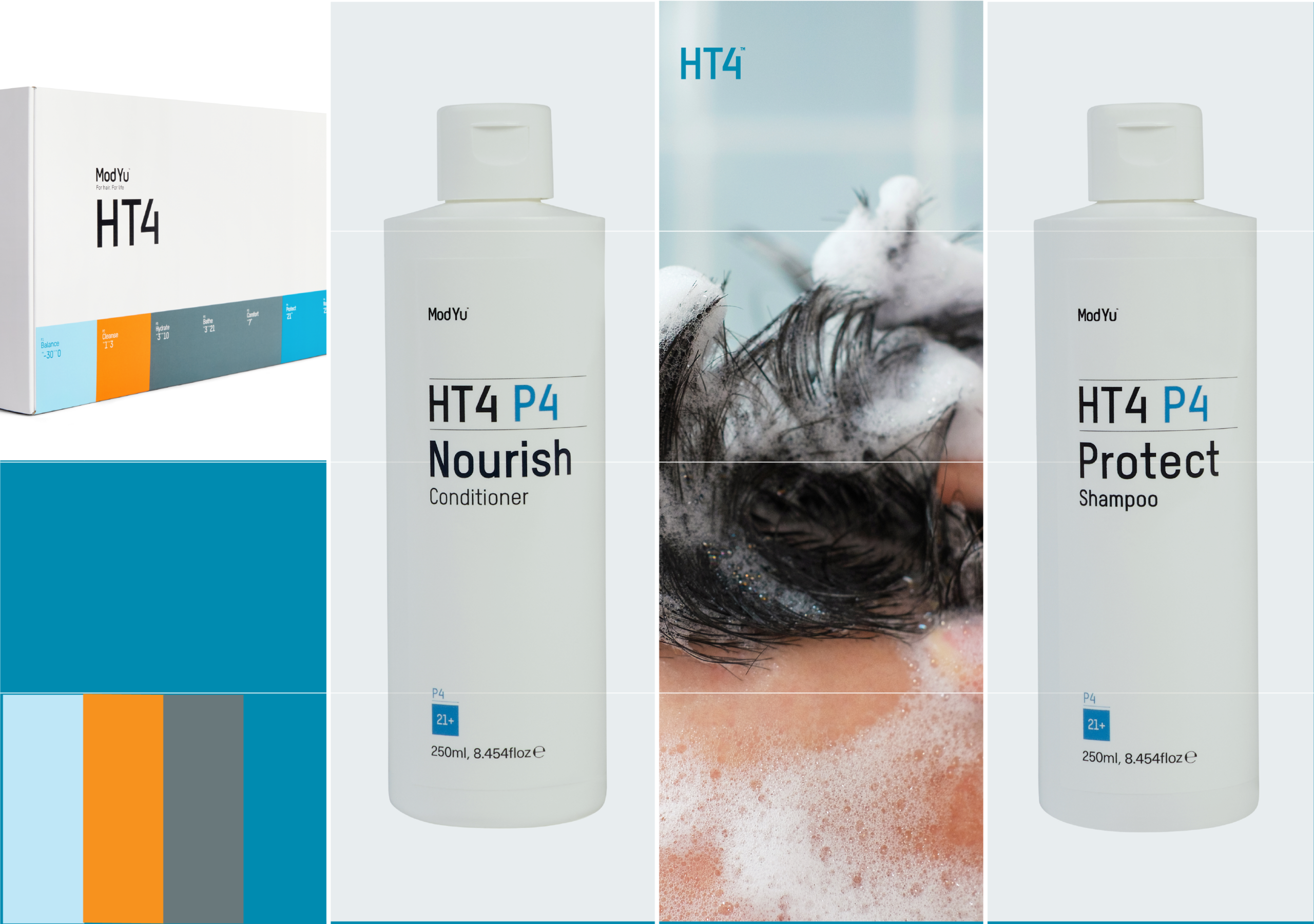
Phase 4 begins around day twenty-one, once the healing phase has passed, and it’s built around two products with two distinct jobs: Protect, a shampoo, and Nourish, a conditioner. Unlike the earlier phases, there’s no fixed end date here. This is the stage designed to sit alongside you for as long as you want to keep looking after your scalp and hair properly, not just during recovery.
If you’re joining the series here, it’s worth reading What Is HT4? The Story Behind the Four-Phase Hair Transplant Aftercare System, which explains how each phase fits into the wider recovery journey.
Protect focuses on the scalp. Nourish focuses on the hair
It’s a simple line, but it’s the clearest way I can explain why Phase 4 has two products rather than one. Protect looks after the scalp itself, through regular, ongoing cleansing as part of a healthy long-term routine. Nourish looks after the hair you actually have, its softness, its condition, how manageable it feels day to day. They’re not solving the same problem twice. They’re solving two different problems that happen to sit on the same head.
What Protect was designed to do
I want to be completely upfront about this: Protect wasn’t designed to regrow hair, and I would never want to suggest that it could. Hair loss is complex, and if regrowth is genuinely what you’re looking for, the treatments with the strongest evidence behind them are hair transplantation, licensed medications, and certain clinician-recommended therapies. **A shampoo isn’t one of them**, and I’m not going to pretend otherwise.
So why did I create Protect at all? Because looking after your scalp, and the hair you already have, still matters, long after the transplant itself is finished. A well-formulated shampoo can help keep the scalp clean and comfortable, support it as part of a healthy everyday routine, and leave your hair feeling healthier and easier to manage. Those might sound like modest goals next to some of the claims you’ll see elsewhere in this industry, but they’re goals I genuinely believe a shampoo can deliver on. I’d rather make promises I know I can stand behind than ones that sound impressive but can’t be.
What Nourish was designed to do
This is where my background as a hairdresser probably matters more than anywhere else in HT4. A successful hair transplant isn’t only about the hair that grows. It’s about living with it, day to day, for years afterwards. Nourish exists for that. It’s there for softness, condition, manageability, reducing tangles and the friction that builds up when you brush, helping hair look and feel healthier. That isn’t vanity. It’s simply looking after the hair that’s now growing, in the same way anyone would want to look after any hair they care about.
Many men have never regularly used a conditioner before, and that’s completely understandable. But once your transplant has healed, the transplanted hair simply becomes part of your everyday hair. Looking after its condition, reducing dryness, improving manageability and making it easier to style isn’t vanity. It’s just good hair care.
Why does a healthy scalp matter?
Every strand of hair grows from your scalp. If it’s dry, uncomfortable or irritated, that’s often reflected in how your hair looks and feels too, long before most people think to connect the two. People commonly notice dryness, flaking, excess oil or sensitivity before they ever think about the health of the scalp underneath. That’s part of why Phase 4 exists. Not because Protect and Nourish promise to regrow hair, because they don’t, but because they were designed to help you look after your scalp and the hair you already have, as part of a sensible, long-term routine.
The transplant may be complete, but your scalp is still the environment your hair lives in every day. Looking after that environment remains important long after healing has finished.
As a hairdresser, not a surgeon
As a hairdresser, I’ve always believed healthy-looking hair starts with looking after both the scalp and the hair itself. A transplant changes the distribution of your hair. It doesn’t change the fact that your hair still deserves proper care. Hair transplant surgeons change lives in a single day. Hairdressers spend years helping people live with their hair afterwards. Both perspectives matter, and HT4 comes from having seen both. A surgeon will naturally talk to you about follicles and biology, and that matters enormously. But someone who has spent years behind a salon chair tends to talk about something slightly different: what you actually see, feel and live with every day. That’s the perspective Phase 4 comes from.
If you’d like to learn more about the thinking behind HT4 and the wider work we’re doing in hair restoration, you can read more on the About ModYu page.
Why HT4 doesn’t promise more than it can prove
We’re only going to promise what we genuinely believe our products can do.
I think that’s becoming one of the most important things HT4 stands for. The hair loss industry is full of products making increasingly ambitious claims, and it would be easy to join in. I’d rather HT4 be known for the opposite: telling patients honestly what our products can do, and just as importantly, what they can’t. I think patients deserve that honesty. Ironically, I think claiming less makes us more believable, not less, because it means you can trust everything else we tell you too.
Phase 4 isn’t about trying to grow more hair. It’s about helping you look after the scalp and hair you already have, for months and years after recovery has finished. Because a hair transplant is one day. Looking after your scalp is for life.
As HT4 has evolved, I’ve also spent a great deal of time thinking about how structured aftercare can support clinics as well as patients. That’s something I’ll explore in more detail in another article on why clinics choose to partner with HT4.