Why Balance?
and the Value It Adds Before Surgery
For years I watched patients prepare for surgery in every way imaginable. They researched clinics, compared surgeons, read every review they could find, and saved for months to afford the procedure they wanted. But one thing was almost always overlooked: the scalp itself, the actual thing the surgery was going to happen to. That gap is exactly where Phase 1, Balance, comes in.
What is Phase 1 Balance
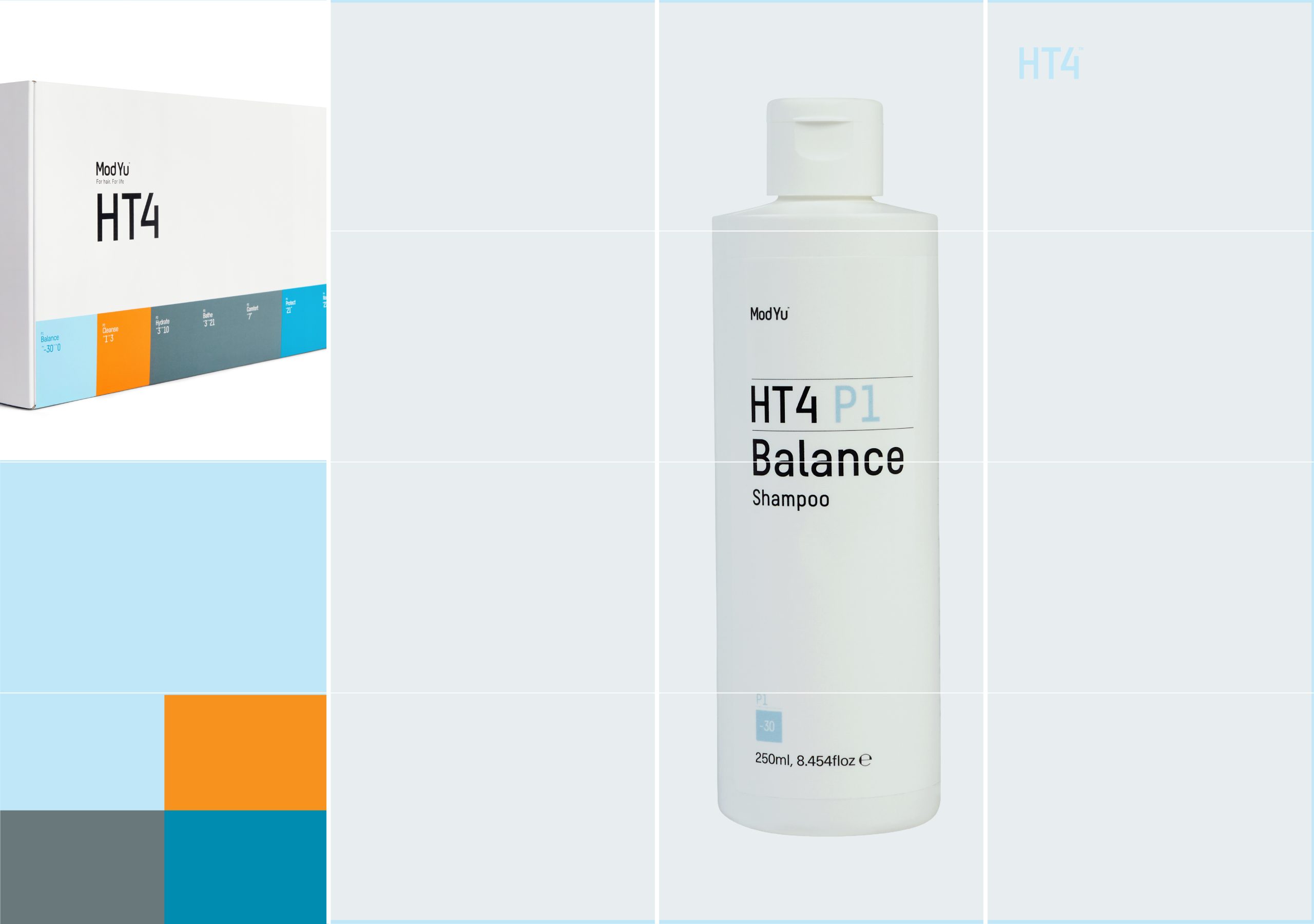
Balance is the first phase of the HT4 clinic-led aftercare system, used in the thirty days before your procedure. HT4 starts before surgery because I don’t believe aftercare should begin after the operation. Balance is a shampoo, but its purpose isn’t really about washing your hair. It’s about preparing the scalp before surgery, so you arrive at your appointment having already started looking after the area your surgeon is about to work on.
Why does scalp preparation matter before a hair transplant?
It matters because your surgeon isn’t just operating on a plan, they’re operating on the actual scalp you bring with you that day. A calm, clean, comfortable scalp is simply a better starting point than one that’s irritated, flaky or inflamed, in the same way any surgeon would rather work on skin that’s in good condition than skin that isn’t. That’s not a dramatic claim. It’s closer to common sense. But it’s exactly the kind of common sense that gets skipped. If you’re interested in why this gap exists in the first place, I’ve explored it in more detail in my article on why aftercare is so inconsistent around the world.
I’ve never believed preparation guarantees anything about how surgery goes, and I want to be clear about that. What I do believe, and what I designed Balance around, is that patients deserve the chance to arrive at their procedure with their scalp in the best condition they can reasonably get it into, rather than leaving that entirely to chance.
Preparation isn’t just physical
Something interesting happens when patients begin HT4 before surgery. They stop feeling like someone waiting for an operation and start feeling like someone actively preparing for one. That’s not a small shift. Patients tell me they feel more proactive, more reassured, more prepared and more in control once they’ve started their Balance routine, and I don’t think that’s incidental to the product. From the outset, Phase 1 was created with the understanding that preparation isn’t only about the condition of the scalp. It’s about the condition of the patient, too. You’re not just preparing the scalp for surgery. You’re preparing the person.
Why did I design Balance the way I did?
The aim was to create something gentle enough to use every day for a month, that would leave the scalp feeling genuinely clean and comfortable without ever being harsh. The formulation was chosen specifically for that daily, thirty-day rhythm, not adapted from an everyday shampoo.
I know thirty days can sound like a lot when you first hear it, so let me be clear about what it actually means in practice. It isn’t an extra step added onto your routine. It simply replaces the shampoo you’d be using anyway, for the month before your procedure. There’s no product to add to your life, no new task to remember. You’re already washing your hair. Balance just makes sure that, for this one month, the shampoo you reach for is doing something useful in the run-up to surgery. Balance is a rinse-off formula, so it needs consistent use to actually have an effect. Thirty days is simply enough time for that consistent use before surgery.
Piroctone Olamine sits at the centre of that formulation, and I’ve deliberately used it at 1%, which is the maximum concentration permitted in a rinse-off product like shampoo in the UK and EU. I didn’t want to water it down. Piroctone Olamine works by directly targeting Malassezia yeast, the yeast most commonly responsible for flaking, itching and dandruff-prone scalps, and it does that gently. Many anti-dandruff formulations rely on harsher actives such as ketoconazole, which can be tougher on both the scalp and the hair structure with regular use. Piroctone Olamine was selected because it gives you that same real, evidenced benefit, without asking your skin or hair to tolerate something more aggressive during a month when you’re already preparing for surgery.
The rest of the formulation was chosen just as deliberately, even if each ingredient’s job is simpler to explain. Tea tree is there to help the scalp feel genuinely clean. Rosemary supports that same sense of a fresh, conditioned scalp. Thyme contributes to keeping the scalp environment clean day to day. Juniper was chosen for its traditional association with calming, conditioning the scalp. Corn mint gives that fresh, cooling sensation patients consistently describe as feeling refreshed. Eucalyptus rounds out that same clean, fresh feeling across the whole formulation. None of them were chosen to make a dramatic claim. They were chosen to make thirty days of daily use feel genuinely pleasant rather than clinical. I go into the full ingredient list in more depth on the product page itself, because this article is really about why that thirty-day window exists at all, not a full breakdown of the formulation.
If you’d like to explore the formulation in more detail, including the complete ingredient list and why each one was selected, you’ll find everything on the Balance Shampoo product page.
Does Balance affect the scalp microbiome?
This is a question I want to answer carefully, because it’s an area where it’s easy to overstate things, and I’d rather be accurate than impressive.
A healthy scalp barrier naturally supports a balanced scalp microbiome, and a clean, comfortably conditioned scalp is part of what allows that barrier to function well. Balance wasn’t designed to change or manipulate the microbiome, and I’d never claim it does. It was formulated to help create a clean, comfortable scalp environment before surgery, using ingredients selected for their gentle cleansing and scalp-conditioning properties. Anything beyond that would be more than the evidence supports, and I’d rather you trust what I say about Balance because it’s precise, than doubt it because it isn’t.
I’ve also written a separate article looking at the role of the scalp microbiome in recovery, including what the current evidence tells us and, just as importantly, where the evidence still has limits.
What does Balance add for clinics?
It extends a clinic’s standard of care into the pre-operative period, which is territory most aftercare conversations don’t reach at all. Rather than a patient’s engagement with structured aftercare starting on the day of surgery, it starts a month earlier, which means patients arrive already familiar with the HT4 system and what to expect from it. I explore this in more detail in my article on why clinics choose to partner with HT4, but it’s worth saying here too: consistency that starts before surgery is easier for a clinic to build on than consistency introduced for the first time in a moment of post-op anxiety.
What Balance can realistically do for you?
What Balance gives you is a considered, consistent starting point, built up over the month before surgery rather than left to chance. I think that has real value in its own right. What it isn’t, and I want to be completely straightforward about this, is a guarantee. Balance doesn’t prevent complications, doesn’t guarantee surgical outcomes, and doesn’t determine how successful your transplant will be. Those things depend on your surgeon’s skill and your individual biology, not on a shampoo.
It was also never designed to work alone. It’s the opening phase of a four-phase journey, and everything it establishes in the thirty days before surgery is there to make the transition into Phase 2 Cleanse, immediately after your procedure, feel less abrupt. That’s the article I’ll turn to next.
If you’d like to see how structured aftercare can make a difference from a patient’s perspective, take a look at Shelley’s story, where she shares her own experience following a hair transplant.
Balance was never designed to work in isolation. It’s the first step in a structured four-phase journey, with Phase 2: Cleanse taking over immediately after surgery to support the earliest stage of recovery. I explain the thinking behind that phase in the next article in this series – Why We Designed Phase 2 Cleanse This Way.