10 minute read
When Are Hair Transplant Grafts Secure? (Day-by-Day Guide)
If you’ve recently had a hair transplant, one of the most common questions is:
“When are my grafts secure?”
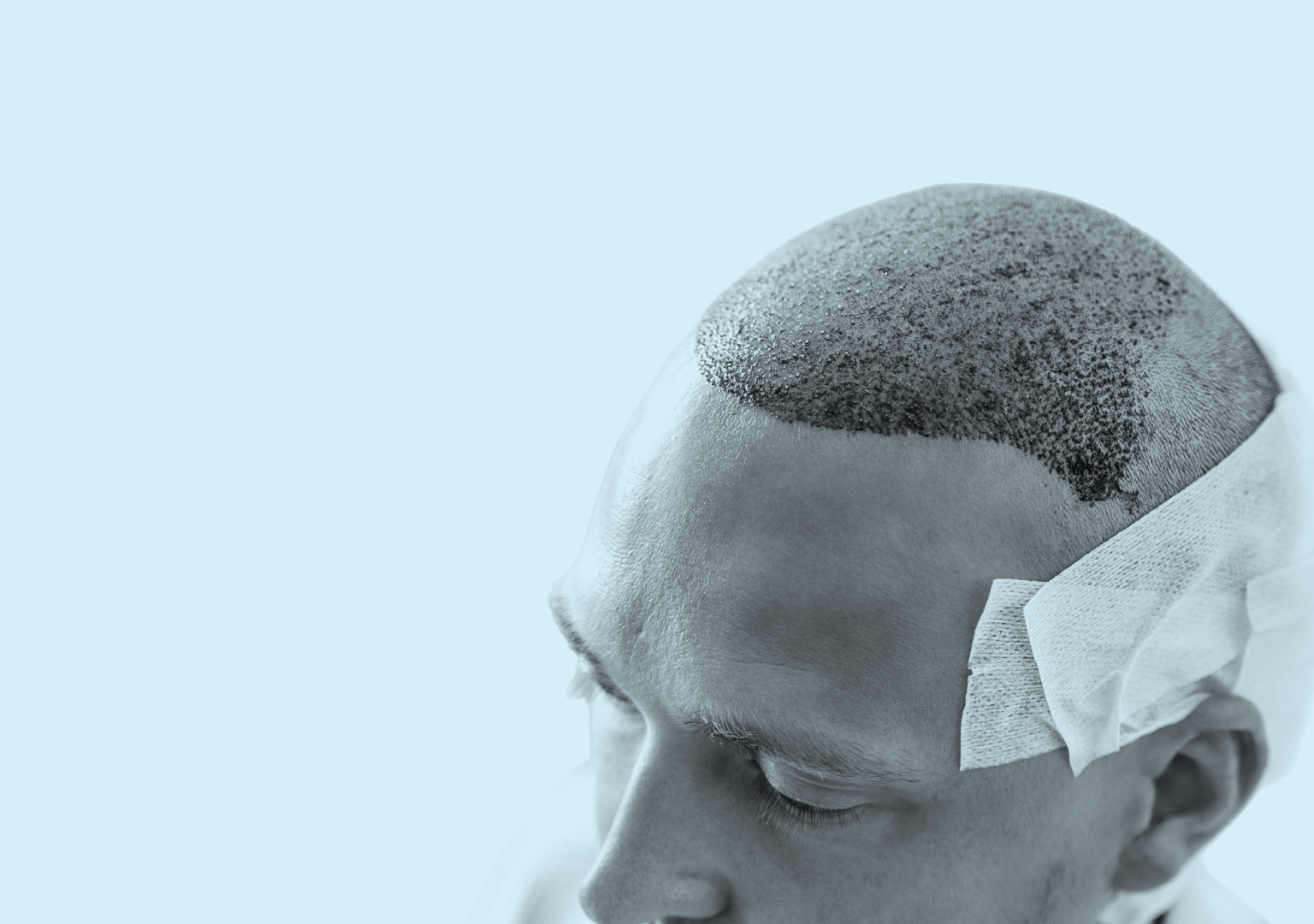
The short answer is that grafts are most vulnerable during the first 0–3 days, and progressively more secure as healing continues. By Day 8–10, grafts are generally considered secure in most uncomplicated cases, provided no significant trauma has occurred.
Understanding what happens each day and how to care for your scalp properly can help reduce anxiety and provide clarity during recovery.
Day-by-Day Healing Overview
Day 0–1: Placement & Maximum Vulnerability
• Grafts have just been placed.
• Anchoring has not yet begun.
• The scalp may ooze small amounts of wound fluid.
• Unnecessary contact, rubbing or aggressive washing could dislodge grafts.
This is the time when grafts are most sensitive to handling or pressure.
Day 2–3: Early Stabilisation Begins
• Fibrin (a natural healing protein) begins forming around grafts.
• Crusting becomes visible.
• Anchoring is progressing but not complete.
These first 72 hours are also when the scalp is most inflammatory. Swelling, redness and sensitivity are normal at this stage.
Day 4–5: Transitional Phase
• Anchoring continues to strengthen.
• Scabs may begin loosening naturally.
• Tightness or itching can increase.
Grafts are more secure than Day 1, but still not fully stable.
Day 6–7: Increasing Security
• Tissue integration improves significantly.
• The likelihood of accidental dislodgement reduces significantly under normal handling.
• Scabs can usually be removed gently according to clinic guidance.
Day 8–10: Secure Phase
• Grafts are generally considered secure in most uncomplicated cases.
• Normal washing techniques can typically resume (as advised by your clinic).
• Surface scabs should have shed.
Unexpected graft loss without clear trauma is uncommon in uncomplicated cases.
Why Moisture Balance Matters
Healing skin needs to be moist not wet and not dry.
Too dry: Scabs harden, tightness increases, and crusts may adhere strongly to grafts.
Too wet: Skin can become macerated and barrier function may weaken.
Correct moisture balance helps maintain the natural healing environment during re-epithelialisation the process where new skin cells move across the surface to close tiny wounds.
Why the Donor Area Is Also Important
Although the donor area often appears to heal quickly, hundreds or thousands of micro-extractions were performed.
When large numbers of grafts are removed, the surrounding tissue must contract slightly to close extraction sites. This can create a sensation of tightness or tension.
Careful aftercare during this phase helps maintain comfort and supports consistent healing across both donor and recipient areas.
Is Baby Shampoo Really the Best Option?
While baby shampoo is a common post-op recommendation, “gentle” does not always mean “optimal” for surgical recovery. Here is why the science suggests looking beyond the nursery aisle:
1. The pH Conflict (Eyes vs. Scalp)
Baby shampoo is formulated to be “tear-free,” meaning its pH is balanced to match human eyes—roughly 7.4 (neutral). However, a healthy adult scalp is naturally acidic, with a pH between 4.5 and 5.5. This acidity forms the “Acid Mantle,” a vital protective barrier.
2. Compromising the Skin Barrier
Using a neutral pH baby shampoo on healing surgical sites can disrupt this acidic shield. After a transplant, your scalp is highly vulnerable; maintaining an acidic environment is essential to:
Warding off pathogenic bacteria that thrive in higher pH levels.
Supporting the microbiome as the skin repairs itself.
Preventing excessive dryness and irritation of the donor and recipient areas.
3. Cleaning Efficacy for Adults
Baby shampoos are designed to remove light infant oils, not the sebum, dried blood, and crusting associated with adult hair transplant recovery. Inadequate cleansing can lead to scabs being difficult to remove.
Sun, Exercise and Alcohol
Sun exposure can increase inflammation and prolong redness during early healing.
Heavy exercise in the first week may increase swelling and blood pressure, which can affect comfort.
Alcohol (both consumption and alcohol-based topical products) can increase dryness and irritation, disrupting moisture balance during the critical early phase.
Summary
• Days 0–2: Highly vulnerable
• Days 3–5: Stabilising
• Days 6–7: Increasingly secure
• Days 8–10: Generally secure in uncomplicated cases
The first 72 hours are the most inflammatory and sensitive. Maintaining a clean, balanced, and calm scalp environment helps reduce avoidable disruption during early healing.