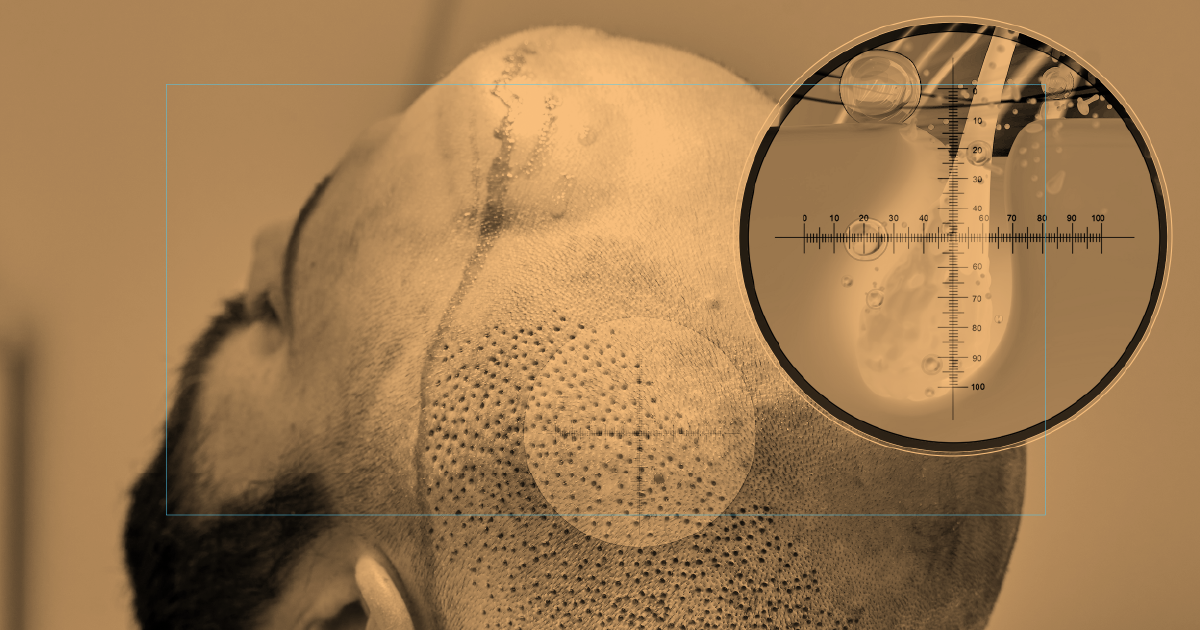
The Science of Hair Transplant Healing: What Actually Happens to the Scalp After Surgery?
Hair transplant surgery is often discussed in terms of graft numbers, density and technique.
But what determines how the scalp recovers?
Understanding the biological healing process helps explain why the first week matters so much and why structured aftercare guidance is increasingly valued by both patients and clinics.
This article explains what happens beneath the surface of the scalp after surgery, in clear and practical terms.
The First 72 Hours: The Inflammatory Phase
Immediately after surgery, the scalp enters what wound-healing literature describes as the inflammatory phase.
During this period:
- Blood vessels dilate.
- Immune cells (such as neutrophils and macrophages) migrate into the area.
- Collagen signalling begins.
- The body initiates tissue repair.
This phase typically lasts around 72 hours.
From a patient perspective, this is why the first few days are often described as the most delicate. The scalp is actively responding to controlled surgical trauma, and newly placed grafts have not yet re-established their own blood supply.
How Do Transplanted Grafts Receive Blood?
During the first 2–3 days, grafts survive through a process known as plasmatic imbibition absorbing nutrients from surrounding tissue fluid.
Around day three, early vascular connections begin forming (often described as primary inosculation). By approximately day five to seven, revascularisation progresses further.
As outlined in hair transplant literature and discussed by surgeons such as Sara Wasserbauer in the context of wound healing
Dr.Sara Wasserbaeaur-wound healing (think this should be a link)
This first week represents a critical biological transition.
In uncomplicated cases, grafts are generally considered increasingly secure by day six or seven, provided no significant mechanical disruption has occurred.
It’s important to emphasise:
Final growth outcomes depend on surgical technique and individual biology. Aftercare supports comfort and stability it does not replace surgical skill.
Why Moisture Balance Matters (Not Wet. Not Dry.)
Wound-healing principles consistently emphasise the importance of maintaining appropriate moisture balance.
According to dermatology texts such as Clinical Dermatology and clinical discussions within the International Society of Hair Restoration Surgery community, healing environments that are:
- Too dry → may slow surface cell migration (re-epithelialisation).
- Too wet → may lead to maceration.
- Balanced → support optimal surface recovery.
For hair transplant patients, this translates to:
- Avoiding excessive dryness.
- Avoiding aggressive washing.
-
Supporting a stable, comfortable environment.
The goal is not to “soak” the scalp — and not to leave it tight and dry — but to maintain balance.
What Causes Crusting and Why Does It Matter?
After surgery, the scalp produces wound fluid (exudate).
When this dries, it forms crusts.
Crusting itself is not abnormal. However:
- Thick crusts can adhere to the hair shaft.
-
Removal can create traction.
-
Traction during early anchoring phases may increase mechanical stress.
This is why many clinics provide structured guidance during the first week to reduce unnecessary friction and avoidable disruption.
It is not about fear.
It is about understanding timing.
Difference Between Hygiene and Over-Cleansing
The Proliferative Phase: Days 4–14
After the inflammatory phase, the scalp enters the proliferative phase.
During this stage:
- Fibroblasts deposit collagen.
-
Surface cells migrate to close micro-incisions.
-
Revascularisation continues.
-
The scalp begins transitioning from acute recovery to stabilisation.
Patients often notice:
- Reduced redness.
-
Tightness or dryness.
-
Itching.
Itching during this stage is typically related to:
- Healing skin.
-
Nerve regeneration.
- Surface dryness.
Understanding that itching is often part of normal healing can reduce anxiety and unnecessary manipulation.
Why Standardised Aftercare Is Increasingly Discussed
Hair transplantation has advanced significantly in surgical precision.
However, aftercare guidance across the industry can vary.
Some clinics provide:
- Basic saline spray.
-
Generic baby shampoo.
-
Minimal phase-based explanation.
Others now favour structured, timeline-based guidance aligned to the biological stages described above.
Why?
Because healing is biological-but patient behaviour varies.
Structured guidance:
- Reduces confusion.
-
Reduces unnecessary friction.
-
Reduces avoidable variability.
-
Provides reassurance during the most anxiety-prone period.
It does not change surgical biology.
It supports patient clarity.
Pre-Surgery Scalp Condition Also Matters
While most attention focuses on post-operative care, scalp condition prior to surgery is also relevant.
Patients commonly present with:
- Dryness
-
Flaking
- Irritation
-
Sebum imbalance
Preparing the scalp before surgery helps create a more stable surface environment.
Again, this is not about altering graft survival.
It is about promoting comfort, compliance, and predictability.
What This Means for Patients
Understanding the timeline can remove much of the uncertainty:
Days 1–3
Most delicate phase. Avoid mechanical disruption.
Days 4–7
Anchoring strengthens. Crusting may still require gentle management.
Days 7–14
Surface healing progresses. Tightness and dryness are common.
After Week 3
Focus shifts towards long-term scalp health and maintenance.
Healing is gradual.
Patience matters.
A Structured Approach to the Healing Timeline
The HT4 care pathway was designed to align with these recognised biological phases:
- Pre-procedure scalp preparation
-
Immediate post-procedure hygiene
-
Early recovery hydration and comfort
-
Ongoing scalp maintenance
It does not replace surgical protocols.
It provides a structured framework patients can follow at home.
As surgical standards continue to rise, clarity and consistency in recovery guidance are increasingly seen as part of the overall patient experience.
What This Means After a Hair Transplant
Hair transplantation is a surgical procedure but recovery is a biological process.
Understanding what the scalp is doing beneath the surface helps explain why timing, balance, and gentle handling matter.
When patients understand the “why,” compliance improves naturally.
And when guidance aligns with biology, recovery becomes less uncertain and more structured.