Saline Spray After a Hair Transplant: Why It’s Used and How It Helps
The Role of the Scalp Microbiome in Hair Transplant Recovery
When people think about hair transplant recovery, they often focus on graft security, washing, or swelling.
But there is another layer that receives far less attention:
The scalp microbiome.
Understanding this helps explain why balance – not sterility – is the goal during recovery.
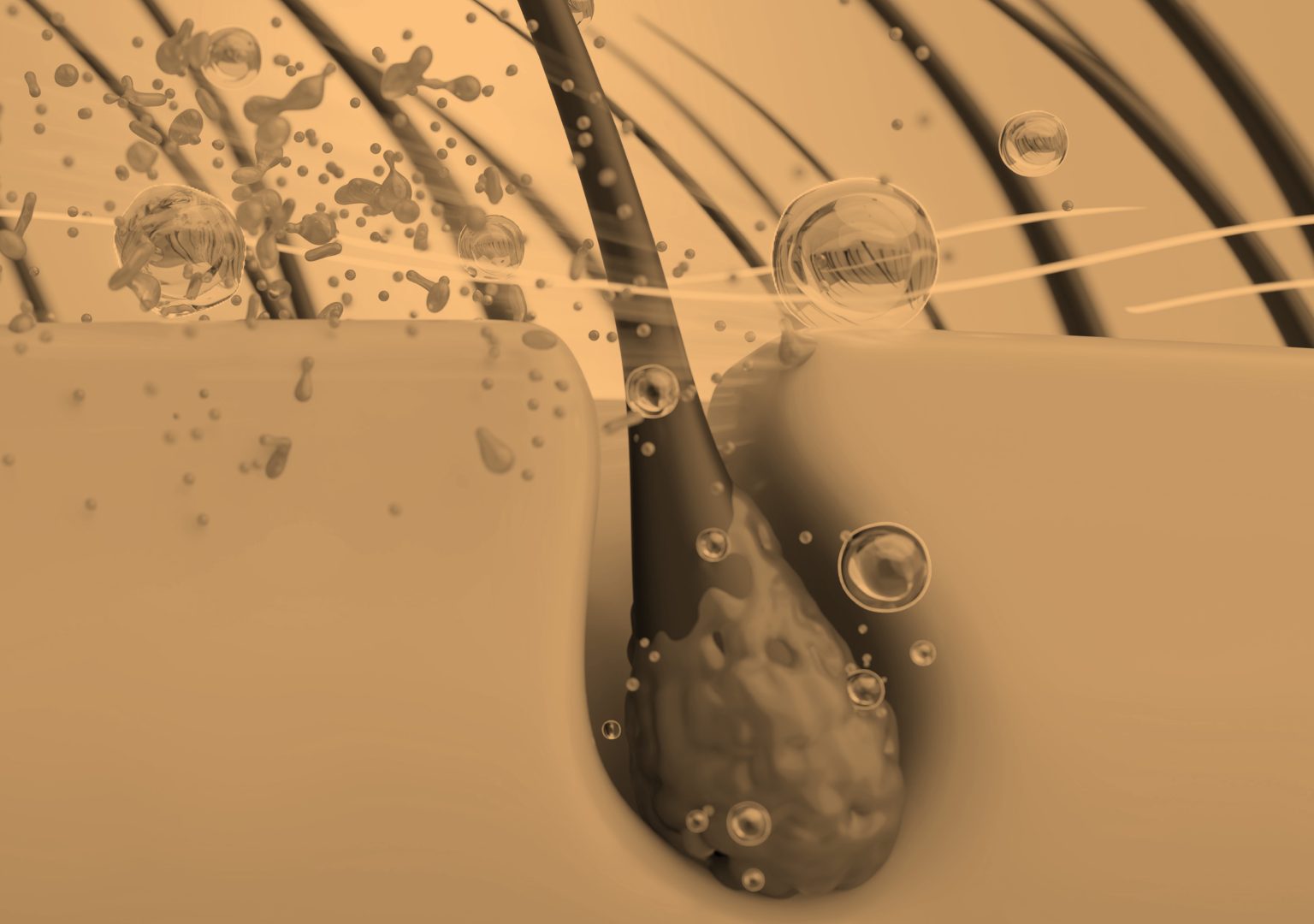
The scalp, like all skin, is home to a community of microorganisms.
This includes:
- Bacteria
- Fungi
- Yeasts
These organisms naturally live on the skin’s surface and form what is known as the microbiome.
In a healthy state, this ecosystem exists in balance.
It helps:
- Support the skin barrier
- Compete with unwanted microbes
- Maintain surface stability
The scalp is not sterile – and it is not meant to be.
What Happens to the Microbiome During Surgery?
Hair transplant surgery creates thousands of small, controlled micro-incisions.
Although the procedure is performed in sterile conditions, the scalp surface itself remains a living biological environment.
Immediately after surgery:
- The skin barrier is temporarily disrupted
- Wound fluid (exudate) is produced
- Local inflammation increases
- Surface conditions change
These changes can temporarily alter the scalp’s surface ecosystem.
This does not mean “infection.”
It means the environment is in transition.
Why Barrier Function Matters
The outermost layer of the skin – the stratum corneum – acts as a protective shield.
It:
- Prevents excessive water loss
- Regulates surface hydration
- Maintains pH balance
- Supports microbial equilibrium
When the barrier is temporarily compromised after surgery:
- The scalp may feel tight
- Dryness can increase
- Itching may occur
- Sensitivity rises
During this period, the goal is not to aggressively sterilise the scalp.
It is to allow the barrier to recover.
The Difference Between Hygiene and Over-Cleansing
In the early post-operative period, hygiene is essential.
However, there is a difference between:
- Supporting surface cleanliness – and
- Disrupting the recovering barrier
Harsh surfactants, alcohol-based products, or excessive manipulation may:
- Increase dryness
- Disturb pH balance
- Delay barrier normalisation
A recovering scalp generally benefits from:
- Gentle cleansing
- Moisture balance
- Minimal friction
- Calm handling
Balance is the theme.
In some early aftercare routines, a sterile saline spray may be used to support gentle surface hydration without introducing additional irritants.
Is the Microbiome Linked to Graft Survival?
This is where clarity is important.
There is currently no established evidence that manipulating the scalp microbiome directly improves graft survival.
Graft survival depends primarily on:
- Surgical technique
- Vascular reconnection
- Individual biology
However, maintaining a stable surface environment may help reduce avoidable irritation and discomfort during the healing window.
This distinction matters.
We avoid exaggeration.
We focus on what is supported.
Why pH and Formulation Type Matter
Healthy adult scalp skin typically sits at a slightly acidic pH (around 4.5–5.5).
This acidity:
- Supports barrier integrity
- Discourages overgrowth of undesirable organisms
- Helps regulate microbial balance
Products that are significantly more alkaline can temporarily disrupt this balance.
This is why many dermatology-aligned formulations aim to support the scalp’s natural pH range – particularly when the skin is already sensitised.
This is also why dermatological testing for scalp products is important when developing formulations intended for sensitive or recovering scalp environments.
Common Post-Surgery Symptoms Explained
During recovery, patients frequently report:
- Itching
- Tightness
- Flaking
- Mild redness
These symptoms are often linked to:
- Barrier repair
- Surface dryness
- Collagen remodelling
- Temporary microbiome shifts
These changes are part of normal post-transplant scalp healing and usually settle as the scalp gradually stabilises.
Understanding this can reduce anxiety.
Not every itch is a complication.
Often, it is part of normal recovery.
Why Structured Guidance Helps
After surgery, patients receive instructions.
But instructions can vary between clinics.
Some patients are told simply to:
- Spray saline
- Use baby shampoo
- Avoid touching
Others receive more detailed, phase-based guidance aligned to the biological stages of healing.
Structured guidance helps because:
- It reduces confusion
- It reduces product experimentation
- It reduces unnecessary friction
- It supports consistent behaviour
When behaviour is consistent, surface stability improves naturally.
A Balanced Approach to Recovery
The goal of recovery is not to sterilise the scalp.
The goal is to:
- Support hygiene
- Maintain moisture balance
- Protect the barrier
- Minimise unnecessary disruption
The HT4 care pathway was designed around this principle – aligning each phase of care with the changing needs of the recovering scalp.
It does not attempt to alter surgical outcomes.
It supports clarity, comfort, and consistency.
Final Thought
Your scalp is a living biological system.
Recovery is not only about graft anchoring – it is also about allowing the surface environment to stabilise.
When patients understand this, they are less likely to over-cleanse, over-manipulate, or panic over normal sensations.
And when aftercare aligns with biology rather than guesswork, recovery becomes more structured – and more predictable.